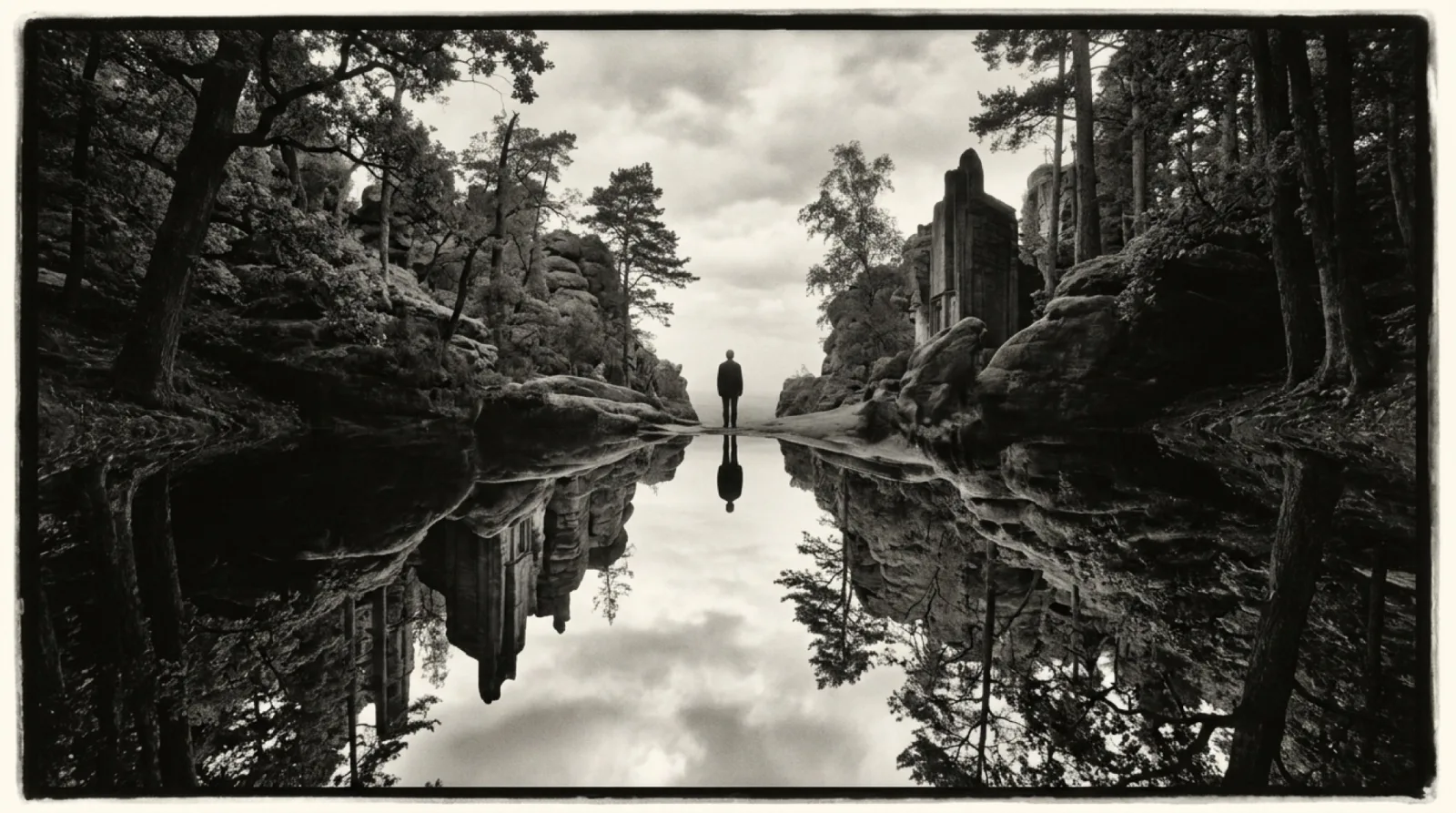
Film noir was never a genre its makers named or intended. The French critics who coined the term in 1946 were looking backward at a body of American crime films, produced between roughly 1941 and 1958, that shared a visual grammar of deep shadow, off-kilter camera angles, and a pervasive sense that the world had gone fundamentally wrong. What those critics identified, Hollywood had stumbled into partly through necessity: wartime material shortages forced economy in lighting, German and Austrian emigre directors carried Expressionist instincts from Europe, and a literary tradition of hardboiled fiction gave writers a language of terse, disillusioned prose that translated directly to screen dialogue.
The classic cycle ended not with a declaration but a slow fade. Television absorbed the crime procedural. Color stock became standard. The Production Code weakened and then collapsed. By the mid-1960s, the shadowy interiors and femme fatales of the studio era looked like period artifacts.
The Revisionist Turn of the 1970s
What followed was not extinction but transformation. Roman Polanski's Chinatown (1974) is usually taken as the founding document of neo-noir: a period film that wears the costumes and vernacular of the 1930s private-eye tradition while systematically destroying every consolation that tradition offered. Jake Gittes is not Sam Spade. He is competent and even decent, and the film punishes him for both qualities. The villain wins. The innocent die. The detective's knowledge changes nothing.
That inversion, using noir's formal vocabulary to reach conclusions the original cycle could not permit, became the template for everything that followed. Robert Altman's The Long Goodbye (1973) had already sent Marlowe shuffling through a 1970s Los Angeles that had no use for his code. Night Moves (1975) gave us a detective whose investigation leads him into paralysis rather than resolution. These films were not nostalgic. They were autopsies of a mythology.
The decade also produced a parallel strand of urban noir, Taxi Driver (1976), Klute (1971), Looking for Mr. Goodbar (1977), that dispensed with period setting entirely and drove the form's core anxieties into contemporary American cities. The threat was no longer a scheming heiress. It was the city itself, leaching sanity from anyone who stayed too long.
The 1980s and the Problem of Self-Consciousness
By the 1980s, neo-noir had become aware of itself in ways that created new problems. Body Heat (1981) understood that it was transposing Double Indemnity to Florida. Blood Simple (1984), the Coen Brothers' debut, understood that it was watching noirs watching noirs, compressing the genre's characteristic paranoia until the frame nearly burst. Blood Simple works not as homage but as dissection. Every character operates on incomplete information and acts from that incompleteness. The misunderstandings compound without mercy. The Coens would return to this structure throughout their career, each time with different tonal register, sometimes farcical, sometimes tragically still.
The decade also saw neo-noir go transnational. French cinema, which had named the original form, now contributed films like Diva (1981) and Betty Blue (1986) that processed American noir iconography through a sensibility alien to Hollywood. Japanese cinema developed its own noir lineage, as did Hong Kong, where John Woo and Johnnie To would eventually produce the most formally rigorous crime films of the 1980s and 1990s.
The Coen Brothers and the Return to Source
The Man Who Wasn't There (2001) sits at an unusual angle to the neo-noir tradition. Where most neo-noir is set contemporaneously or makes its period concerns explicit, the film chooses 1949 Santa Rosa, California, the same year and rough geography of Hitchcock's Shadow of a Doubt, and refuses to use that setting ironically. Ed Crane is not a clever man reflecting on noir conventions. He is a man who barely thinks at all, who cuts hair because he has always cut hair, who finds himself entangled in a blackmail scheme not from greed or lust but from a vague, inarticulate desire to be something other than what he is.
The film shoots in color and prints in black-and-white, as Roger Deakins and the Coens well understood that monochrome in 2001 would read as deliberate quotation. That is precisely the point. The visual scheme acknowledges that we are watching a constructed past, a memory of cinema as much as a story about people. And yet the emotional investment the film demands is entirely sincere. Ed Crane's opacity is not a postmodern pose. It is a condition the film treats with clinical sympathy.
Neo-Noir After 2000
The twenty-first century neo-noir is a broad church. Christopher Nolan's Memento (2000) borrowed noir's unreliable narrator and made the unreliability structural and neurological. Drive (2011) reduced the form to pure iconography, the stoic driver, the neon-lit streets, the eruption of violence, and let that reduction work as a kind of poetry. True Detective's first season (2014) televised the form's darkest philosophical registers, grafting Thomas Ligotti's pessimism onto a Louisiana procedural.
What connects these works across their obvious differences is a shared understanding that noir is not primarily about crime. It is about knowledge, the gap between what characters know, what they think they know, and what the audience is permitted to see. Crime is simply the mechanism that makes that epistemological problem urgent and irreversible.
The Persistence of Shadows
The critical question facing neo-noir now is whether self-consciousness can still generate feeling. When every filmmaker working in the tradition knows the tradition intimately, when the femme fatale and the corrupt police captain and the night-wet streets have been quoted so many times that they carry quotation marks by default, what remains of the original form's capacity to disturb?
The answer, where it exists, tends to come from filmmakers who use the genre's familiar furniture to furnish genuinely unfamiliar rooms. Unusual settings, unexpected protagonists, moral frameworks that do not map onto the American tradition at all. The form is capacious enough. What it requires, as it always has, is a willingness to follow the implications of darkness wherever they lead, without flinching at the destination.
The Man Who Wasn't There remains one of the clearest demonstrations of that principle. It goes where it goes without apology, and it arrives somewhere genuinely bleak. That is not a failure of the genre. That is the genre at its most honest.